By Guardian Media Limited

Nestled in the northeastern coast of Trinidad, pillowed by verdant vegetation on land and blanketed by the surf of the Caribbean Sea, is the coastal community of Matelot.
On land, it’s accessible by a single, winding road flanked by forest on one side and coastline vistas on the other.
Matelot, the French word for sailor, like most communities along the coast, can also be accessed by boat from the sea. Long ago, goods came to the community from «steamers» and landed by the river mouth, Shark River.
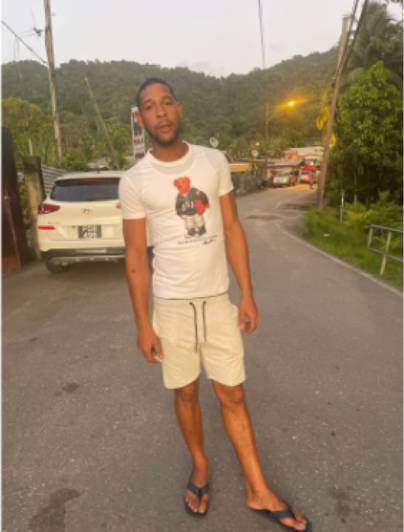
And it’s from the sea that most of the villagers derive their livelihood. It’s the community, where heritage runs deep in the shoreline and life and lifestyle are linked to the sea, that Chad «Chapo» Joseph, 26, grew up in before he was allegedly killed in a US airstrike on October 14.
Last Sunday, it would have been two months since Joseph died, his mother, Lenore Joseph, told Guardian Media.
Outside her bricked, one-storey home, is a banner which marks his sunrise and sunset dates, which has been there since October 22, when a memorial to mark his life was held.
In Matelot, there is one high school, one primary school, a private bus which charges $30 one way to Sangre Grande, and a few parlours that service the 300-plus members of the community.
Signs of progress, like its Outreach Centre, are as visible as its decay, like its dilapidated wooden homes.
A boy who started fishing
In this place, somewhat frozen in stories of the people who live there, it was easy to chart Joseph’s story in the community, as most people remember him as a boy who started fishing early after he finished school at Matelot Secondary. He has several uncles and his mother and several siblings–he has five in total–who also stay in Matelot.
Most boys in the village, his uncle said, grew up to be fishermen and either stayed in the community or left because of a lack of opportunities.
In Joseph’s case, when he was older, he went to stay with his aunt, Lynette Burnley, and relatives in Las Cuevas.
Gaston Graham, a bar owner in the village, said he remembered Joseph as a boy being out at sea.
Historically, Graham explained, the communities of Las Cuevas, Blanchisseuse and Matelot were connected as remote communities in the country. As a result, most families in the communities were connected. And in these coastal communities, it was easier to get to Venezuela than to south Trinidad.
For the village, the connection to Venezuela is not geographically bound.
Graham said a lot of Joseph’s family belonged to the Salvary family, which used to own acres of land in Matelot and were some of the first settlers from Venezuela in Matelot.
«He has Venezuelan heritage,» he said of Joseph.
«Fishing is embedded in the culture of the family. They are seafaring people,» he added.
Matelot community in shock over Joseph’s alleged links to drug trafficking
Graham said the news of Joseph being labelled a narco-terrorist by the US Government had shocked him and the community.
«I didn’t believe it,» he told Guardian Media when the news broke. Two months on, people still find it hard to believe of him.
With deaths mounting and little evidence to suggest Joseph was a narco-trafficker, opinions have formed on the US and its actions, human rights, their understanding of the law and the Prime Minister’s support for the strikes.
Graham, who used to work as a seasonal farmer in Toronto, returned and retired in Matelot several years ago.
From his vantage, it’s easy to identify what he termed delinquents in the community.
He observed that people’s lifestyles–like having mansions as homes and several vehicles–usually indicate whether they were traffickers, and there was little in Joseph or his family’s lifestyle to openly suggest such.
«I think there could have been a better method to find out what was in those boats; there was a total disregard for humanity,» he said.
Following news of his death, Joseph was identified as the nephew of drug lord Vaughn «Sandman» Mieres, who was charged with being a gang leader during the 2011 state of emergency but was released for lack of evidence.
«He was his nephew. But why people bringing all that up? That has nothing to do with what happened to him (Joseph),» said his aunt Lynette Burnley.
Two weeks ago, Graham said villagers have heard the US drones «humming», and in one instance, an aircraft circled a boat, but nothing happened.
When Guardian Media visited last week, there was only one boat anchored to fish. The owner, Brent, who is also Joseph’s uncle, said that things in the community have been hard because of the lack of upkeep of the facilities and the changing weather patterns.
A mother’s call for closure
For Lenore, the daily internal struggle is palpable–the shadow of doubt that lingers because there is the lack of a body of her dead son looms large every day.
Since news broke, her life has been characterised by the conflicting turmoil of having faint hope and the harsh reality of Joseph’s sudden death with no body for a burial.
Joseph is her second child. She found out about his alleged death from people telling her on social media.
While the family has had a memorial service for Joseph and, for the most part, believes he is dead, no one has officially confirmed it.
Joseph and another Trinidadian fisherman, Rishi Samaroo, are believed dead from the same strike. Joseph’s family believe it was him because he had communicated with his common-law wife, Ayana Roberts, that he was coming home from Venezuela the night of the bombing. He died in the sea between the countries in which he lived.
She said the last time she spoke with him, he told her he was happy in Venezuela, but he got tired and wanted to come back home.
When asked whether he assessed the risk of leaving at that time given that it was one month into the repeated US strikes, she answered, «I believe so, and he took that risk.»
When Guardian Media asked her why he took that risk, she responded, «I know about the sea law; I know since I was young. If it’s a boat, whatever, you’re supposed to stop it, see. The law is not to kill people. Wherever you are, you are not to kill people like that. This is the first time in my life, and I am 51 years old; I have never heard about this kind of stuff,» she said.
On having her son labelled a narco-trafficker, she responded, «Where is the proof? If it’s drugs, where is the proof? Where is it? You understand?»
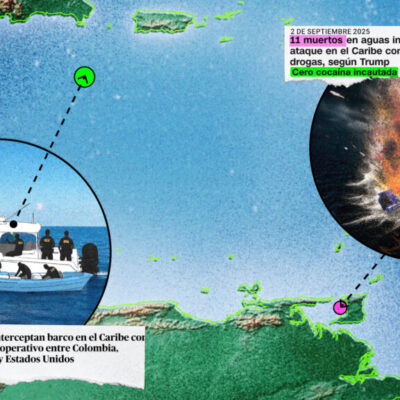
It was Joseph’s family, being one of the first to identify him out of over 100 people who have lost their lives in the strikes, which shed a human light on the people who were dying as a result of the US strikes in the Caribbean Sea. The human stories started to put pressure on the Trump administration by members of Congress who called for transparency on its strikes and have tried to challenge and curtail them.
Trinidad and Tobago’s Government has maintained that no T&T fisherman has been killed. On November 13, Attorney General John Jeremie told the Financial Times that no local fisherman had been killed, and that position was adopted by Foreign Affairs Minister Sean Sobers a day later.
Missing persons reports have been filed by both Roberts and the Samaroo family.
«It’s hard. Sunday gone was two months since that happened, and the Government here saying they might both be locked up. If they are locked up somewhere, in three days, we’re supposed to know what really going on,» Lenore said.
She said her MP, Wayne Struge, has not visited the family since the news broke.
«And everyone knows us. They know where to find me. You found me. It’s not a secret,» she said.
Lenore, like 74 others in the community, was employed in the State’s make-work programmes–Cepep, URP and Forestry–until she lost their jobs several months ago.
With no income readily available, she said she can’t stop her other children, who are also fishermen, from going out to sea.
«Sometimes you can tell them, «Don»t go.’ How will they make their little money? Fish is fish … most people fishing and they make their money,» she said.
For now, she wants closure and for the Government to take an interest in its missing citizens.
Guardian Media could not get an update from government officials or from Commissioner of Police Allister Guevarro on the status of these investigations or of the two decomposed bodies which washed up on the Cumana and Balandra shores in early September, believed to be linked to the strikes.